
Secure infrastructure
Use AI safely within your own environment, without sending confidential information outside your organization.
For embedded software development
teamsSecure AI
Appliance
Use open-weight LLMs on-premises to improve development efficiency without exposing confidential
information.
Our engineers support you at every step — from building the secure AI environment to rolling out AI-driven
development across your team.
Fixstars Vega is designed to answer every one of them.
Challenge
How Fixstars Vega solves it
Source code and design documents cannot be sent to cloud AI, limiting where AI can help.
Use AI safely within your own environment, without sending confidential information outside your organization.
Deploying and tuning the latest models for fast, team-wide response requires deep expertise.
Open-weight LLMs verified and optimized by Fixstars are ready to use the moment the system is deployed.
Token-based billing grows with usage, making monthly costs difficult to forecast.
A flat rate independent of usage volume keeps AI costs predictable and easy to manage.
AI handles test code and quick questions well, but full AI-driven development still falls short on quality and productivity.
A harness for using AI agents at every stage of development, raising your team's productivity.
A “secure AI appliance” that lets embedded development teams use AI without exposing code or design information externally. Four layers, delivered as a single appliance.
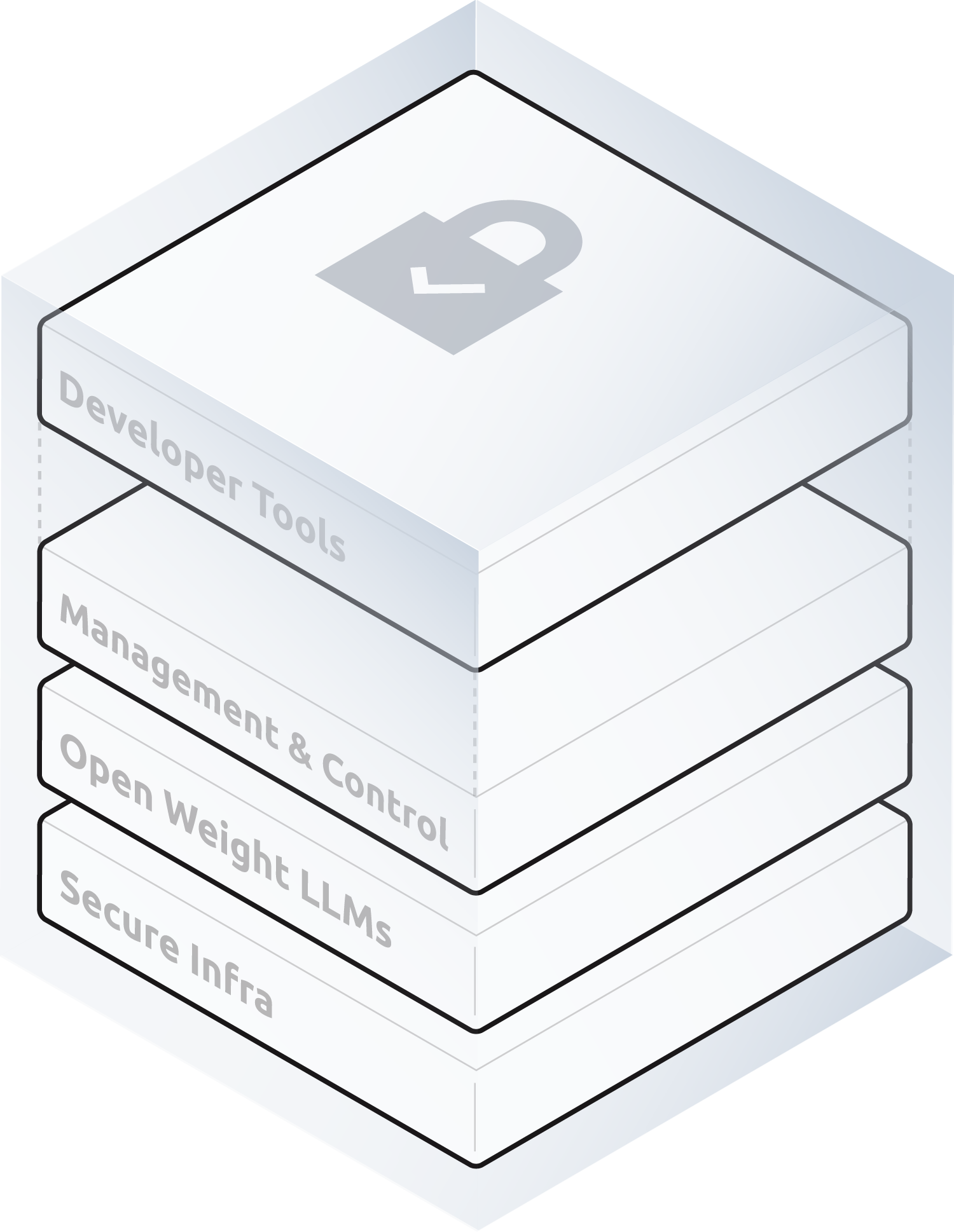
AI chat, AI coding agents, and internal knowledge work together to support everyday development — investigation, implementation, review, testing, and maintenance.
Grasp the structure of legacy code, control logic, drivers, and middleware.
Look up related specifications and past design decisions from your internal documents.
Write and fix C/C++, Python, test code, and build scripts.
Review against coding standards, design rules, and past defect patterns.
Build unit tests and error-path (negative) tests, analyze logs, and investigate root causes.
Analyze the processing performance of AI models and applications, identify bottlenecks, and explore ways to improve them.
We offer two deployment models, based on data sensitivity, location, and your operations setup: a private model on dedicated hardware, and a shared model you can reach over the API.
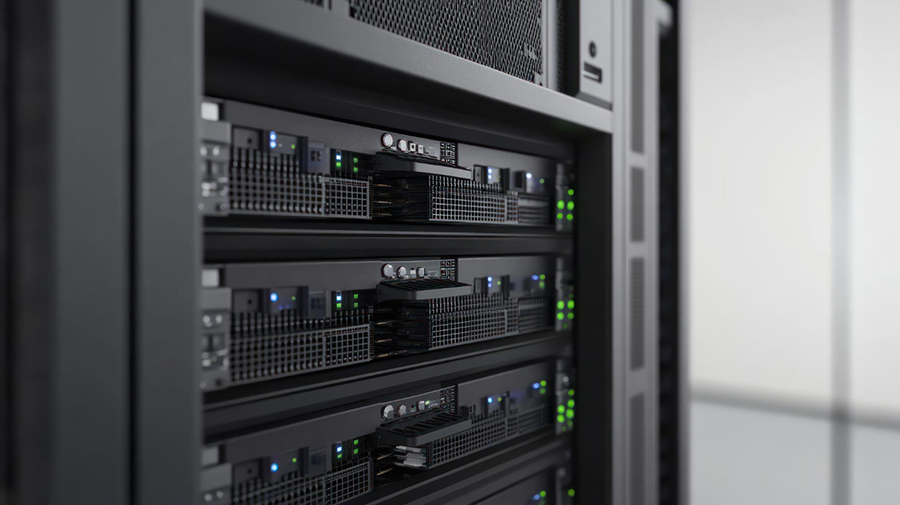
Dedicated hardware built inside your own facility.
Ideal for
Teams whose code must stay onsite
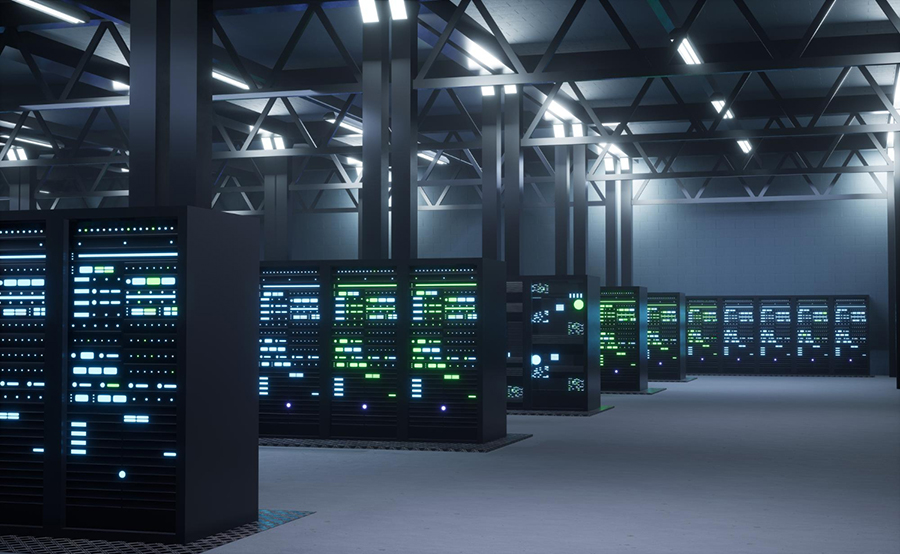
Dedicated hardware built and operated in our data center.
Ideal for
Teams that want security with less operational load

A dedicated server and VPC on a partner GPU provider's infrastructure.
Ideal for
Teams that need a dedicated environment fast
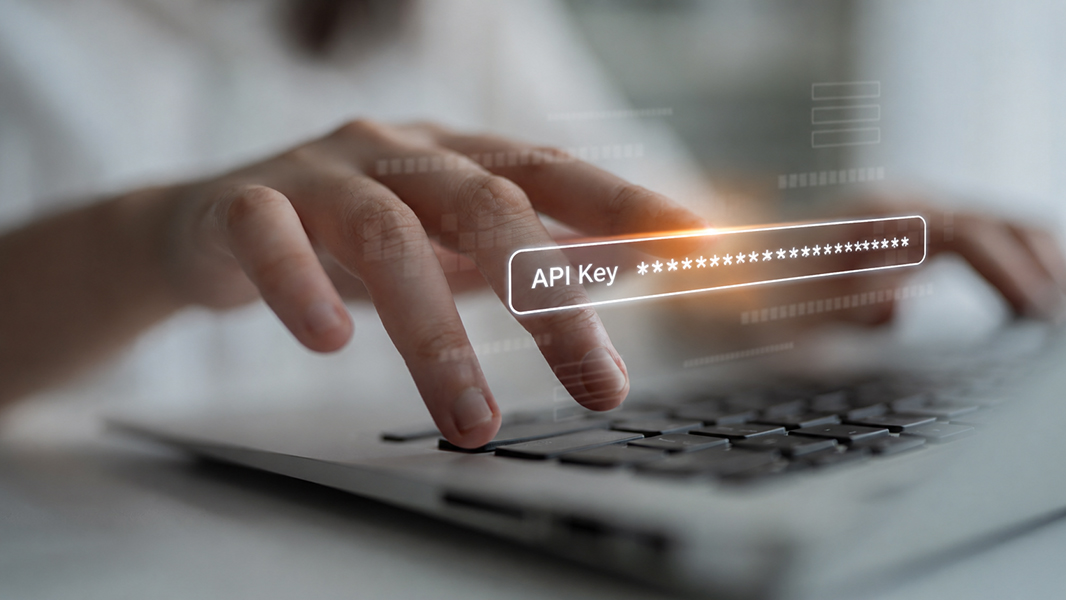
Remote access to a Fixstars-managed Vega instance.
Ideal for
Teams that want to get started quickly
We'll recommend an AI development environment
that fits your security requirements and use cases.
Open-weight model performance is advancing rapidly, making practical development support possible even with local LLMs. Fixstars Vega continuously provides verified open-weight models, tuned to your hardware configuration.
AI models we provide


* As of Aug 2026. The models we offer are updated regularly. GLM-5.2 may not be available depending on hardware configuration.
Performance comparison: open-weight vs. closed LLMs
Running public models as-is may not deliver sufficient performance for production use. Fixstars Vega optimizes the AI model inference infrastructure for simultaneous use across your team.
Standard deployment
Fixstars Vega
With 50 concurrent connections
Frequent request queuing
Almost no queuing
Time to first response in production
~59 sec
~3.8 sec
Optimizations applied
GLM-5.1 / NVIDIA H200 x8, 50 concurrent connections. "Standard deployment" is a TP=8 configuration with no parallelization tuning. Measured with a benchmark reproducing the distribution of 260 real sessions from our internal coding agent (P90 TTFT). Performance is not guaranteed.
Our optimization methods and full benchmark data are published in the white paperCloud AI is billed pay-as-you-go, so costs rise with usage. With Fixstars Vega, your monthly fee stays the same even as team usage grows.
Costs aren't tied to usage, so you can forecast monthly spending.
Explore and experiment freely — including the deep dives your team used to give up on.
As usage grows, the effective cost per use keeps falling.
Our own agentic AI rollout and improved models drove 10x usage growth in four months. Shifting to open-weight models has kept our actual spend down, but running the same volume entirely on pay-as-you-go would cost about $310K a month. With Fixstars Vega, the monthly fee stays the same however much usage grows.
10 x
AI usage growth in four months
92B tokens last week
$310K /month
If all usage were pay-as-you-go
Monthly estimate from last week's usage
Flat
Your Fixstars Vega monthly fee
Unchanged however much usage grows
Cost trend of our internal AI platform
If our usage were entirely pay-as-you-go
$310K /month
Approx. $72,000/week
Monthly estimate based on our weekly consumption and actual unit prices. Actual spend is based on our real cloud AI invoices.
A closer look at our AI costs.
The service brief walks through our actual usage and cost trends.
Built on 20+ years of Fixstars performance engineering expertise, the harness lets AI agents streamline analysis, improvement, and verification — with your engineers in the loop.
STEP 1
STEP 2
STEP 3
STEP 4
Repeat until the target performance is reached.
4.7x End-to-end processing
Manual optimization reached 3.6x in one month. With AI, the same pipeline reached 4.7x in three weeks — a better result for less effort.
3.95x Inference
Conventional manual optimization took about two person-months for 3.31x. Engineer-AI collaboration cut the effort to about one-eighth while delivering a higher speedup.
2.11x Training
Applied bf16 mixed-precision quantization, NHWC memory format fixes, and torch.compile.
The speedup cases in full detail
The service brief covers the specific techniques, measurement conditions, development periods, and impact on accuracy.
Move in stages: a 30-day trial after the seminar, then a group-level rollout, then company-wide deployment.
01
Try the model quality, speed, and harness before you decide.
02
Integrate into daily operations on a group-by-group basis.
03
Roll out company-wide, with harnesses built for your own workflows.
Tell us about your current development environment,
and we'll propose the adoption steps that fit it.
Two hands-on seminars for AI-driven development.
From
a first taste to working on your own team's challenges, choose the one that fits your goal.
For a first hands-on taste
A hands-on walkthrough of the full AI-driven development workflow using the Fixstars Vega environment and tools. An evaluation environment is available afterward.
For teams working on their own challenges
We bring a secure AI development environment to your office, and experienced instructors run hands-on sessions on your own development challenges — enough to reach a decision in two days.
From building a secure AI environment to team-wide adoption of AI-driven development — one-stop support for AI adoption in embedded development.
A brief covering what Fixstars Vega offers: secure AI infrastructure, open-weight LLMs, flat-rate pricing, and AI built into your development process.
Download the briefAsk about specific configurations, pricing, or how Fixstars Vega would run in your environment.
Contact usPrefer to try it hands-on first? See our seminars.