Visualizing and Improving GPU Utilization in Autonomous Driving AI Development
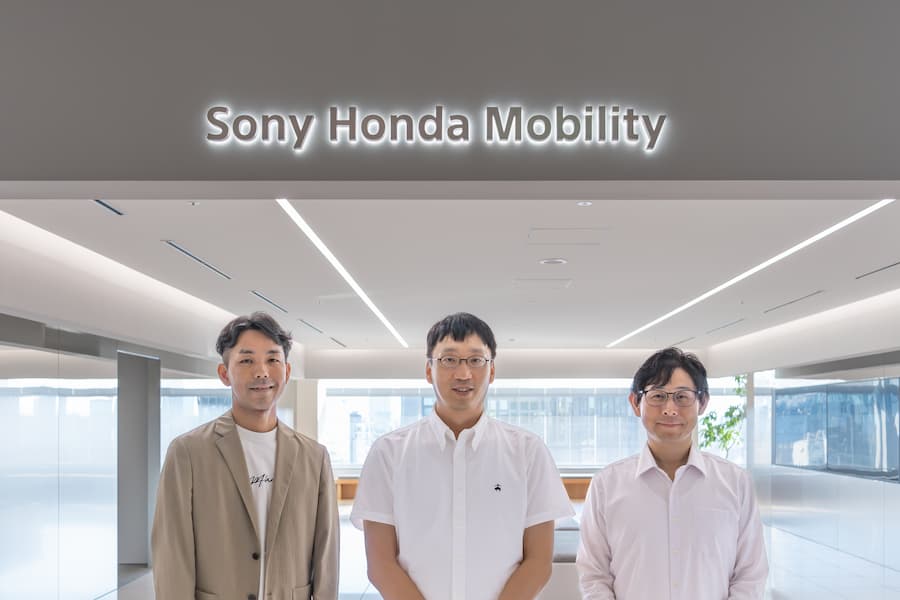
This article documents the technical collaboration between Fixstars and Sony Honda Mobility (SHM), based on interviews conducted in September 2025. It covers the use of AIBooster to improve GPU utilization in SHM's autonomous driving AI development environment.
Overview
-
A key differentiator of AIBooster was its ability to monitor GPU core compute efficiency (SM Activity) in real time.
-
AIBooster became an established resource for performance analysis, serving as the first step in the improvement cycle.
-
An intuitive and easy-to-understand dashboard raised GPU utilization awareness among all employees, from management to team members.
Background
Sony Honda Mobility (SHM) was developing autonomous driving (AD) and advanced driver-assistance systems (ADAS), leveraging numerous in-vehicle sensing devices and cutting-edge AI technology.
In SHM's AD/ADAS development, it was crucial to maximize computational resources to accelerate development and improve quality. Fixstars has a history of providing software acceleration and AI model development support for SHM's AD/ADAS projects. Building on this partnership, we proposed the adoption of "Fixstars AIBooster" to further enhance AI training efficiency.
Solution
The performance engineering platform “Fixstars AIBooster” was deployed within SHM's autonomous driving AI development environment on a GPU cloud.
By enabling real-time monitoring of GPU operational status during AI training, AIBooster established a new standard within the team. At the time of the interview, performance improvement initiatives began with a comprehensive analysis of GPU and storage utilization to identify bottlenecks. The intuitive dashboard, which organizes the necessary information, has also played a part in accelerating the improvement cycle.
Interview
Sony Honda Mobility Inc.
- Masahiro Tamori, Senior Manager, Data & AI Development Environment Dept., Autonomous Systems Development Division
- Yasuhiro Suto, Senior Manager, AI Model Development Dept., Autonomous Systems Development Division
- Motoi Kataoka, Software Engineer, Backend Dept., Network Services Development Division
Real-Time Monitoring of SM Activity Was the Decisive Factor for Adoption
 Masahiro Tamori (Sony Honda Mobility Inc., Senior Manager, Data & AI Development
Environment Dept., Autonomous Systems Development Division)
Masahiro Tamori (Sony Honda Mobility Inc., Senior Manager, Data & AI Development
Environment Dept., Autonomous Systems Development Division)
Masahiro Tamori:We already had a strong working relationship with Fixstars. The immediate catalyst was a conversation between our President, Izumi Kawanishi, and Fixstars’ President, Satoshi Miki. When I heard about a tool that could double the execution efficiency of our computational resources, we decided to try it right away.
A key reason for this was our heavy use of GPUs on the cloud for AI, specifically for developing recognition models. The hardware costs are extremely high, so we needed to accurately understand our return on investment and confirm if we were truly using our GPU resources efficiently. We also wanted a way to visualize and maximize that utilization.
Yasuhiro Suto: From a technical standpoint, the deciding factor was the ability to monitor the GPU's "SM Activity" (Streaming Multiprocessor Activity: the computational efficiency at the basic GPU unit level) in real time with great detail. We had been measuring per-GPU and per-unit-of-time execution efficiency ourselves, but not to the level of detail AIBooster provides. This functionality was what resonated most with our needs.
GPU Utilization Awareness Has Changed in the Year Since Adoption
Masahiro Tamori:The ability to monitor our GPU usage in the cloud environment in real time has been a huge benefit.
Motoi Kataoka: The most significant effect has been a heightened cost awareness. President Kawanishi himself checks the dashboard, showing a strong interest in GPU utilization efficiency. This interest from the top has prompted every AI engineer and every member of the acceleration team to become more conscious of how efficiently their own tasks are using GPUs.
Compared to other monitoring tools, the dashboard is well-organized and easy to view, which is a big plus.
Yasuhiro Suto: In terms of features, the recent update that allows us to check the status of a job while it's still running is excellent. We used to only be able to check after a job was complete, but this increased real-time capability has sped up our improvement cycle considerably.
Now, whenever we implement a performance improvement measure, the first step is to analyze the current situation with AIBooster. The function to analyze both GPU and storage usage on a per-job basis is also unique and highly effective as a starting point for multi-faceted analysis.
 Motoi Kataoka (Sony Honda Mobility Inc., Software Engineer, Backend Dept., Network
Services Development Division)
Motoi Kataoka (Sony Honda Mobility Inc., Software Engineer, Backend Dept., Network
Services Development Division)
Expectations for AIBooster
 Yasuhiro Suto (Sony Honda Mobility Inc., Senior Manager, AI Model Development Dept.,
Autonomous Systems Development Division)
Yasuhiro Suto (Sony Honda Mobility Inc., Senior Manager, AI Model Development Dept.,
Autonomous Systems Development Division)
Masahiro Tamori:From a tool perspective, we hope to see continuous improvements in usability, such as real-time result checking and the ability to interact with jobs while they are running.
We also hope the reports will go beyond just numerical data, including the reasoning behind the results and the progress of improvements, so we can perform a deeper analysis.
Regarding support, we would be grateful for your help with upstream issues beyond just acceleration and monitoring, such as "stabilizing the AI training process" and "scheduler optimization."
Yasuhiro Suto: I'd like to see AIBooster further automate the optimization of AI processing.* The ideal scenario is that AIBooster automatically handles about 80% of the work, allowing engineers to focus on the remaining 20% of core tasks.
As our training data grows, the losses from rare training job failures are not insignificant. If AIBooster could detect the anomalous spikes that cause these failures, we could take measures to prevent them, which would increase the stability of our training process.
Masahiro Tamori:Given the current GPU shortage, we hope for advanced technical support that would allow us to combine different types of GPUs and achieve performance equivalent to a single high-end GPU.
*The contents of this article are based on information from the time of the interview (September 2025). Titles and affiliations are as of the article's publication.